Home › Trades & drivers › Van and car costs
Van and car costs: mileage rate or actual costs?
For tradespeople and couriers, the vehicle is usually the biggest expense. You can claim it two ways: a flat rate per business mile, or the business share of what the vehicle actually costs. The right answer depends on your miles and your vehicle — and your first choice can lock you in.
The short version
- Mileage (simplified expenses): 55p a mile for the first 10,000 business miles, 25p after, for cars and vans; 24p for motorbikes. It covers fuel, insurance, repairs, servicing, tax and the cost of the vehicle.
- Actual costs: the business percentage of fuel, insurance, repairs, road tax, breakdown cover, finance interest, plus capital allowances on the vehicle itself.
- Either way, add parking and tolls on business journeys.
- Once you use the flat rate for a vehicle, you must stay on it for that vehicle. You can’t use it for a vehicle you’ve already claimed capital allowances on.
The mileage rate
Simplified expenses for vehicles are available to sole traders and partnerships (not limited companies). You multiply your business miles by the rate:
| Vehicle | First 10,000 business miles | Over 10,000 |
|---|---|---|
| Cars and goods vehicles (vans) | 55p (45p before 6 April 2026) | 25p |
| Motorcycles | 24p | 24p |
It’s simple: you only need a mileage log, not every fuel receipt. It tends to win for cheap-to-run cars doing moderate miles.
Actual costs
Add up everything the vehicle costs you in the year and claim the business share, worked out from your odometer readings:
- fuel, insurance, servicing, repairs, tyres, MOT, road tax and breakdown cover;
- lease payments, or interest on a loan or hire purchase (not the capital repayments);
- capital allowances on a vehicle you own or buy on HP. Vans usually qualify for the annual investment allowance, so the business share of the cost can come off in the first year. Cars get writing-down allowances depending on CO2 emissions (100% first-year allowance for new zero-emission cars).
It tends to win for vans, expensive or thirsty vehicles, and anyone buying a vehicle outright.
A worked comparison
A courier drives 14,000 miles a year, 12,000 of them for business (86%). Their car costs £3,100 to run (fuel £1,900, insurance £700, servicing and tyres £500), plus £1,200 of writing-down allowances.
| Method | Working | Claim |
|---|---|---|
| Mileage rate | 10,000 × 55p + 2,000 × 25p | £6,000 |
| Actual costs | (£3,100 + £1,200) × 86% | £3,698 |
Here the mileage rate wins by about £2,300. A plumber buying a £25,000 van would usually find the opposite in the year of purchase. Run both before you choose.
The rules that lock you in
- Once you’ve used the flat rate for a vehicle, you must keep using it for as long as you use that vehicle in the business.
- You can’t switch to the flat rate for a vehicle you’ve already claimed capital allowances on, or that you’ve treated as an expense.
- You can choose differently when you change vehicle.
- If you use the flat rate, you can still claim parking and tolls on business journeys — but not fuel, insurance, repairs or capital allowances.
Logging your miles
Both methods depend on knowing your business miles. Record the date, start and end point, purpose and miles for each journey or shift, and take odometer readings at the start and end of the tax year. For delivery work, a shift log with the app’s mileage or your odometer readings is enough.
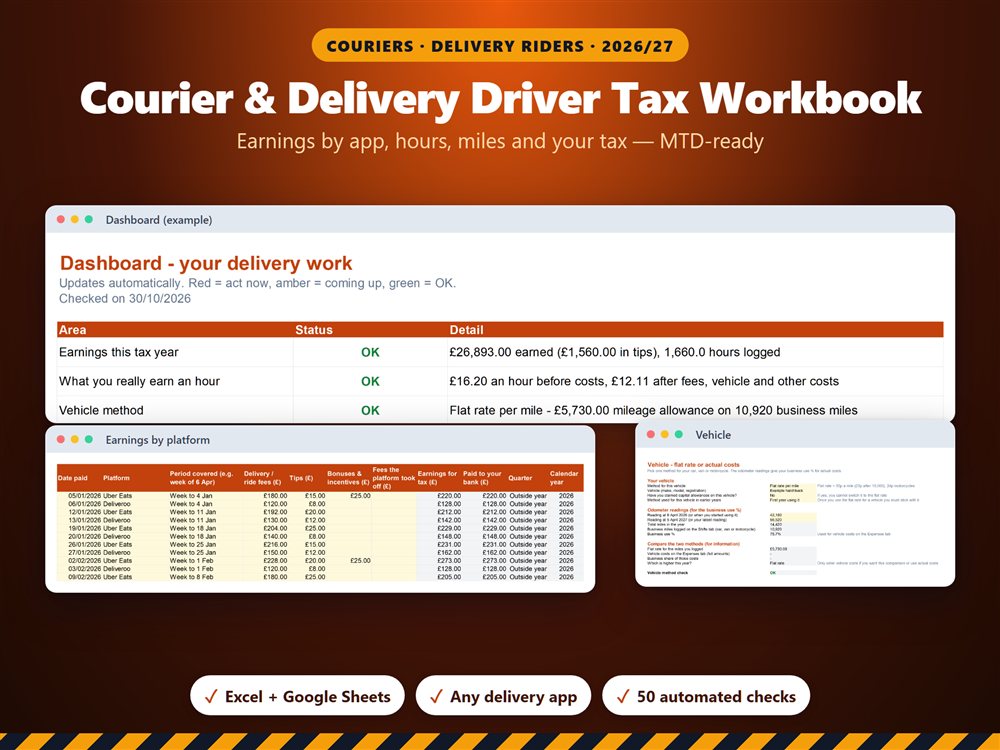
Logs shifts and miles, works out your business percentage from odometer readings, compares the mileage rate with actual costs side by side, and warns you if your choice breaks the flat-rate rules.
Courier workbook on Etsy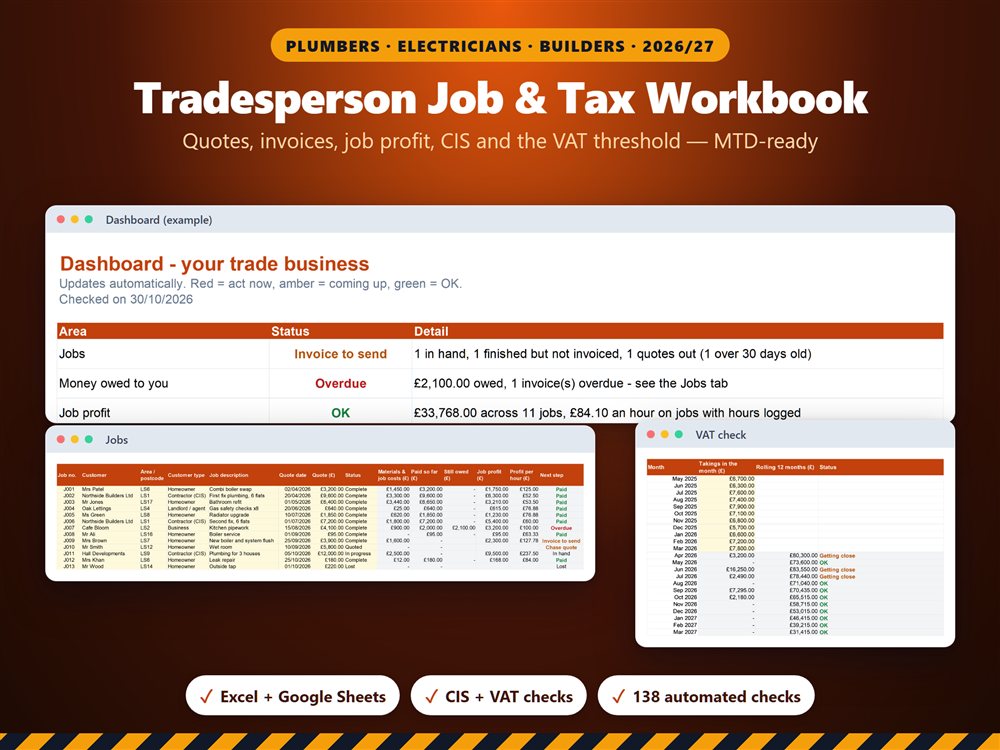
Includes a mileage log at 55p and 25p, a vehicle expenses category, job costs, CIS and a VAT threshold check.
Trades workbook on Etsy